6 Month Old Sleep Schedule
Six months brings longer wake windows, the first spoonfuls of food, often the first tooth, and for some babies the first days on two naps. Here is what a 6-month schedule looks like on a 3-nap day and a 2-nap day, and which of the big changes this month actually affect sleep.
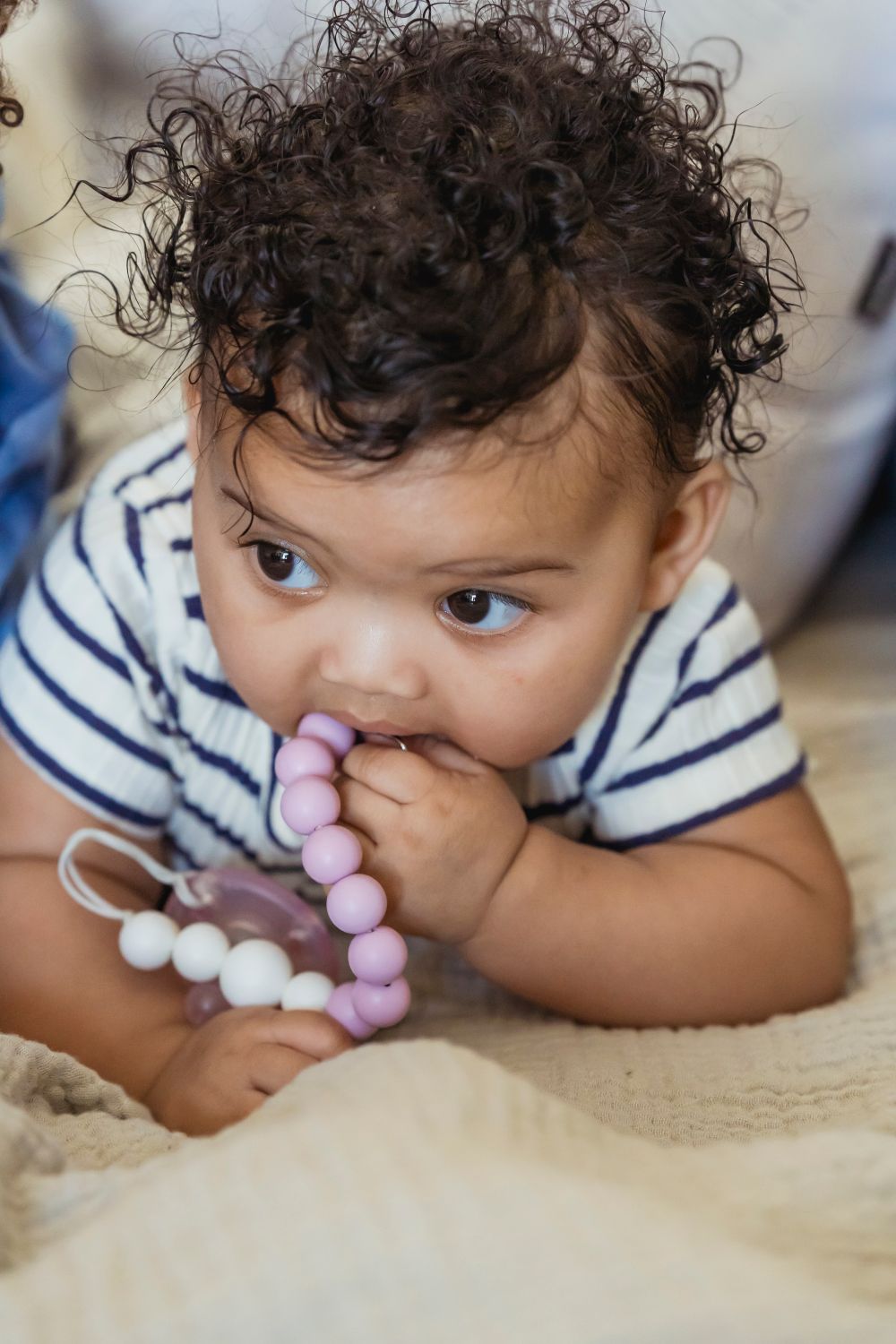
Photo via Pexels
Six months is a milestone month in almost every direction. Your baby can probably sit with support, is about to start solid food, may be cutting a first tooth, and can stay awake long enough for a proper trip to the store. Sleep tends to be more settled than at four months, and the day is starting to look like the 2-nap schedule that will last most of the next year.
Most 6-month-olds are not there yet, though. Three naps is still the norm, with the occasional 2-nap day when the third nap refuses to happen. The trick this month is having a plan for both.
6 Month Sleep at a Glance
| What | Typical at 6 months |
|---|---|
| Wake windows | 2 to 3 hours |
| Naps | 3 a day, with some 2-nap days as the transition begins |
| Nap length | 60 to 90 minutes for the main naps; 30 minutes for a third |
| Daytime sleep total | About 2.5 to 3.5 hours |
| Bedtime | 18:00 to 19:30 (asleep), earlier on 2-nap days |
| Night | 10 to 12 hours in bed; some babies still feed once |
| Total sleep | 12 to 16 hours in 24 hours |
Wake Windows at 6 Months
At six months wake windows usually run 2 to 3 hours, a big jump from the 1h30 to 2h30 of the month before. That is the range the Hushly app uses as its starting point for a 6-month-old (corrected age).
- First window: about 2h.
- Second window: 2h15 to 2h30.
- Last window before bed: 2h30 to 3h, depending on whether it is a 3-nap or a 2-nap day.
Many parents are still using 5-month windows at six months and wonder why naps have become a fight. If your baby happily plays in the crib for 20 minutes before falling asleep, or naps get shorter even though nothing else changed, try adding 15 minutes to each window.
Sample 6-Month Schedules
Both assume a 07:00 wake-up. Times are when your baby is asleep.
3-nap day
| Time | What happens |
|---|---|
| 07:00 | Wake and milk feed |
| 09:00 to 10:15 | Nap 1 (after 2h awake) |
| 12:30 to 14:00 | Nap 2 (after 2h15 awake) |
| 16:30 to 17:00 | Nap 3, a 30-minute catnap (after 2h30 awake) |
| 19:15 | Asleep for the night (after 2h15 awake) |
2-nap day
| Time | What happens |
|---|---|
| 07:00 | Wake and milk feed |
| 09:15 to 10:45 | Nap 1 (after 2h15 awake) |
| 13:45 to 15:15 | Nap 2 (after 3h awake) |
| 18:15 | Asleep for the night (after 3h awake) |
The 2-nap day has an early bedtime, 18:15, and that is deliberate. A 6-month-old can rarely stretch past three hours awake, so without a third nap the evening has to start sooner. Expect the earliest bedtimes of the whole first year during this transition. They are temporary.
Solid meals fit in the awake time. Many families start with one meal mid-morning or at lunch, an hour or so after a milk feed, when the baby is alert and not ravenous.
Two Naps or Three?
Most babies move from three naps to two somewhere between six and eight months. A baby who is ready usually shows several of these, consistently, for a week or more:
- The third nap is refused even when the timing is right.
- Taking the third nap pushes bedtime past 19:30, then bedtime turns into a fight.
- The first two naps are getting longer, often over an hour each.
- Early morning waking appears, with no other obvious cause.
One rough day is not a sign. Teething, a cold or a busy day out can all knock a nap. Mixed weeks, with some 3-nap and some 2-nap days, are normal and can last a few weeks. Let the day decide: if nap 2 ends before 14:30, a third nap is usually needed; if it ends after 15:00, a 2-nap day with an early bedtime often works better. Our nap transitions guide covers the full switch, and our article on dropping a nap too early explains why waiting is usually the safer bet.
Solids and Sleep
The AAP and the NHS both recommend starting solid foods at around six months. It is an exciting change, and it comes with one of the most persistent baby sleep myths: that a full tummy of food will make your baby sleep through the night.
It does not, at least not in a way you would notice. The largest trial on this, the EAT study, started one group of babies on solids from three months and found they slept only around a quarter of an hour longer per night than babies who waited, and guidance still says to wait until around six months. The first weeks of solids are tiny tastes, not meals that replace milk. Milk stays the main source of nutrition for most of the first year.
What solids can do is upset sleep for a night or two when a new food does not agree with your baby's tummy. Offering new foods earlier in the day makes it easier to spot that link, and keeps any discomfort away from bedtime. Our night wakings guide helps when you are not sure whether a waking is about hunger.
Teething at 6 Months
The first tooth often appears around six months, though anywhere from four to twelve months is normal. Teething can make a few nights rougher, usually in the days just before the tooth breaks through. It does not usually cause weeks of bad sleep, and it does not cause a high fever; a temperature over 38°C is worth a call to your doctor rather than a teething explanation.
During a rough patch, keep the routine the same, offer comfort, and use pain relief only as your pharmacist or pediatrician advises. Then go back to the usual schedule once the tooth is through. Our teething and sleep guide covers what helps.
How Hushly Uses These Numbers
The Hushly app starts a 6-month-old on the wake windows above and, from six months, never suggests a nap that starts at 17:00 or later. On days when your baby has already had two good naps and the afternoon is getting late, it suggests an early bedtime instead of a third nap. After about six logged naps it adjusts the windows to your baby's own pattern.
Sources
- Paruthi S, et al. Recommended Amount of Sleep for Pediatric Populations: A Consensus Statement of the American Academy of Sleep Medicine. Journal of Clinical Sleep Medicine, 2016;12(6):785-786.
- AAP (HealthyChildren.org): Starting Solid Foods
- NHS: Your baby's first solid foods
- Perkin MR, et al. Association of Early Introduction of Solids With Infant Sleep: A Secondary Analysis of a Randomized Clinical Trial. JAMA Pediatrics, 2018;172(8):e180739.
- Moon RY, et al. Sleep-Related Infant Deaths: Updated 2022 Recommendations for Reducing Infant Deaths in the Sleep Environment. Pediatrics, 2022;150(1):e2022057990.
A schedule that keeps up with your baby
Hushly starts from the 6-month ranges on this page, notices when your baby is having 2-nap days, and moves bedtime earlier on those days so the transition does not wreck the evening. Free to download.

Reading on a computer? Scan the code with your phone to get Hushly on iPhone or Android.
Frequently asked questions
How long should a 6 month old be awake between naps?
Should my 6 month old be on 2 or 3 naps?
What time should a 6 month old go to bed?
Will starting solids help my 6 month old sleep through the night?
Can teething wake a 6 month old at night?
Sleep schedules by age
Want today's plan for your own baby? The free baby sleep calculator turns age and wake-up time into naps and a bedtime.
- 4 Month Old Sleep Schedule: Wake windows, a 4-nap and a 3-nap sample day, and why naps are short this month.
- 5 Month Old Sleep Schedule: Three naps, the late-afternoon catnap, and what to do about 5 a.m. starts.
- 6 Month Old Sleep Schedule (this guide)
- 7 Month Old Sleep Schedule: The month most babies move to two naps: why the third stops fitting, and a schedule for each.
- 8 Month Old Sleep Schedule: A steady 2-nap day, the longest wake windows yet, and nights with standing and crawling in the mix.
4 Month Old Sleep Schedule
Wake windows, a 4-nap and a 3-nap sample day, and why naps are short this month.

5 Month Old Sleep Schedule
Three naps, the late-afternoon catnap, and what to do about 5 a.m. starts.

7 Month Old Sleep Schedule
The month most babies move to two naps: why the third stops fitting, and a schedule for each.