Why a "Good Baby" Doesn't Mean One Who Sleeps Through the Night
If a well-meaning relative has asked whether your baby is "good" yet, you are not alone, and neither is your baby. Waking at night is exactly what healthy infants are built to do.
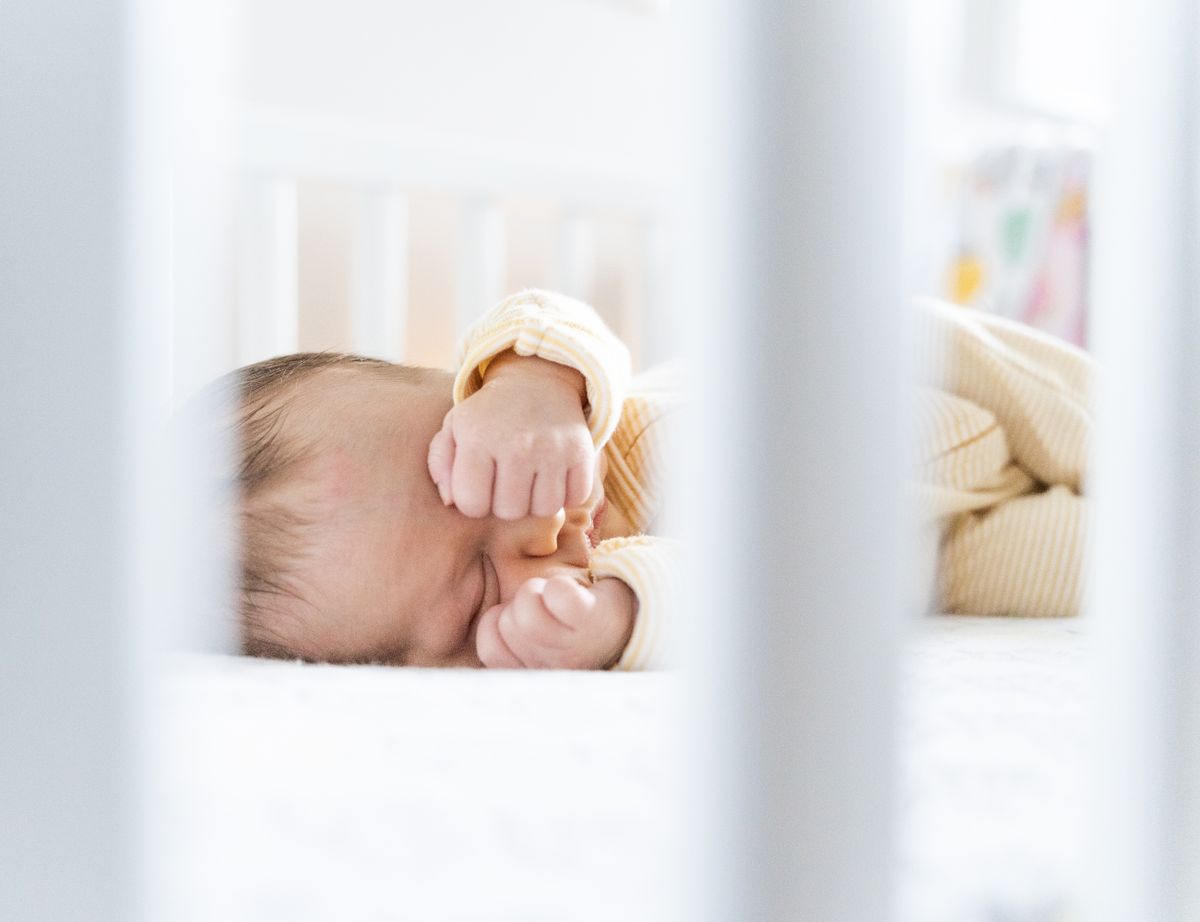
Photo via Pexels
Somewhere along the way, a strange idea took hold: that a "good baby" is one who sleeps through the night, and a baby who wakes is somehow difficult, spoiled, or a reflection of tired parents doing something wrong. It is one of the most quietly damaging myths in early parenthood, because it turns a completely normal biological event into a report card no one should be grading.
Here is the truth, plainly: your baby waking at night has nothing to do with how good they are, and almost nothing to do with how well you are parenting. Let's take the pressure off and look at what is actually happening.
Where the "good baby" myth comes from
The phrase gets passed down through generations, usually with love and no ill intent. Grandparents remember (or misremember) babies who "slept through from six weeks." Friends post milestone updates. A pediatric visit asks about sleep and it starts to feel like a test.
Part of the confusion is a definition problem. In older sleep research, "sleeping through the night" often meant a stretch of just five or six hours, sometimes measured from as early as 7pm. That is a far cry from the eight-to-twelve-hour, dusk-to-dawn stretch most parents picture. So a baby described as "sleeping through" may well have been waking at 1am and settling back on their own, which many babies simply cannot do yet.
The other part is memory. Sleep deprivation blurs the edges of those early months, and the babies who woke constantly are quietly forgotten in family lore while the "easy sleeper" becomes the headline. Add in social media, where the exhausted 3am reality rarely makes the highlight reel, and it starts to feel like everyone else's baby got the memo about sleep except yours.
There is also a cultural piece. In much of the world, close, wakeful, frequently-fed infant sleep is simply expected and never labeled a problem. The idea that a baby "should" sleep alone for long unbroken stretches is a fairly modern and fairly local one. Your baby has not read that particular rulebook, and there is no reason they should.
Why night waking is biologically normal
Infant sleep is not a smaller version of adult sleep. It is its own thing, and waking is built into the design for good reasons.
- Tiny stomachs, frequent needs. Newborns have small stomachs and digest breast milk quickly. Waking to feed overnight is how they get the calories they need to grow, especially in the early weeks and during growth spurts.
- Lighter, more protective sleep. Babies spend more time in lighter, active sleep than adults do. This is thought to be protective: a baby who rouses easily can signal hunger, discomfort, or the need to be repositioned. Easy arousability is a feature, not a flaw.
- Immature sleep cycles. Babies cycle between sleep stages more often than adults, and at the end of each cycle there is a natural brief arousal. Adults have these too, we just roll over and drift off without remembering. Many babies have not yet learned to bridge that gap on their own.
- Comfort and connection. Not every waking is about a physical need. Babies also wake seeking the reassurance of a familiar person nearby, which is a normal part of healthy attachment and not something to be trained away in the early months.
There is one more piece worth naming gently: safe-sleep guidance itself sits alongside this arousability. Sharing a room, back sleeping, and a clear crib are all part of a protective environment, and the lighter, more easily-roused sleep that comes with infancy fits into that same safety picture. You can read more in our overview of safe sleep guidelines.
None of this is a problem to be fixed on a deadline. It is developmentally appropriate. If you want a fuller picture of how these needs shift week to week, our newborn sleep schedule guide walks through what those first months actually look like.
Night waking is not about being "good" (or well-parented)
Let's say this as clearly as possible: a baby's sleep tells you almost nothing about their character or your parenting.
A baby cannot be manipulative, lazy, or spoiled. Those are adult concepts projected onto a tiny nervous system that is simply doing what it is wired to do. When your baby wakes and calls for you, they are not testing you or being difficult. They are communicating a need in the only way they can.
And responding to that need does not create a "bad habit" in the moral sense. Comforting a waking baby is responsive caregiving, and it is exactly what builds the security that helps sleep improve over time. If you find yourself wondering whether a particular waking is about hunger, comfort, or habit, that is a fair and useful question, and we unpack it gently in hunger or habit at night. But the answer never makes your baby "bad" or you a failure.
Every baby is genuinely different
Two babies in the same house, raised the same way, can sleep completely differently. That is not a parenting inconsistency, it is temperament and biology.
Some babies are naturally lighter sleepers or more sensitive to hunger, teething, noise, or change. Some have higher sleep needs, some lower. Some are simply more alert and social, and that wonderful curiosity does not switch off neatly at bedtime. These traits show up early and they are largely outside your control.
The table below sketches the wide, normal range, but please read it as reassurance rather than a target.
| What you might see | Also completely normal |
|---|---|
| Wakes 1-2 times a night | Wakes 3-4 times a night |
| Settles back quickly with a cuddle | Needs a full feed to resettle |
| Sleeps a long first stretch | Wakes within an hour or two of bedtime |
| Content to be put down drowsy | Wants closeness to fall asleep |
If your baby lands in the "more waking" column, nothing has gone wrong. Comparing your night to a friend's, or to a family legend, is comparing two different humans.
What is realistically expected by age
It helps to have a rough sense of the arc, as long as we hold it loosely. Every baby moves at their own pace, and regressions are normal detours, not backsliding.
- 0-3 months: Frequent waking to feed, day and night, with no fixed pattern. This is exactly right for this stage.
- 3-6 months: Sleep gradually consolidates. Some babies string together a longer stretch; many still wake to feed. A bumpy patch around four months is common and expected.
- 6-12 months: Longer overnight stretches become more common, but night feeds and wakings for teeth, illness, or development are still normal for a great many babies.
- 12-18 months: Many, though not all, babies can sleep a long overnight stretch, with wakings around big developmental leaps or discomfort.
Notice that "still wakes" appears at every single stage. That is not a delay, it is the range. When you and your baby are both ready, there are gentle, respectful ways to encourage longer stretches, which we cover in how to help your baby sleep through the night. There is no prize for getting there first.
Letting go of the guilt
If you have felt a quiet shame every time someone asks about your baby's sleep, please set it down. You did not cause the wakings, and you are not failing to fix them.
What you can do is take care of yourself inside a normal, wakeful season: trade night shifts with a partner where possible, lower the bar on everything non-essential, and rest when your baby rests without apology. The wakings will change, because babies change. Your worth as a parent was never measured in uninterrupted hours.
It also helps to change how you answer the question when it comes. Instead of "no, not yet" with an apologetic shrug, you can simply say "she's doing exactly what babies her age do." That small reframe protects your confidence and quietly corrects the myth for the next tired parent who overhears it.
And if the wakings ever feel genuinely out of step with your baby's age, or your own exhaustion tips into something that worries you, that is a fine reason to check in with your pediatrician. Not because your baby is bad, but because support is part of the plan, and no one should carry a hard season entirely alone.
Your baby is not good or bad. Your baby is a baby, and a waking one is a wonderfully, ordinarily healthy one.

See your baby's night through kinder eyes
Hushly tracks night wakings and shows you what is normal for your baby's age, so you can stop second-guessing. Free to download.
Frequently asked questions
Is it true that a good baby sleeps through the night?
At what age do most babies actually sleep through the night?
Does responding to my baby at night create a bad habit?
Why does my baby wake more than my friend's baby?
Is frequent night waking bad for my baby?
How can I cope with the exhaustion of night waking?

The Later Bedtime Myth
Keeping baby up later usually backfires. Here is why an earlier bedtime often means better, longer sleep.
Dropping A Nap Too Early
Dropping a nap too soon backfires with overtiredness and broken nights. Here's how to tell real readiness from a rough patch.
Wake Windows by Age
The awake-time cheat sheet, from 30 minutes as a newborn to 6 hours as a toddler.